

Inside this issue
FROM THE EDITORS
The Rules Changed The Opportunity Didn’t
IN THE NEWS
- Bever Lake Biofuels Project Bites The Dust
- EIA Forecasts Decline In U.S. Biomass Power
- FS, South Dakota Sign Agreement
- Texas County Gets “AA” Biomass Rating
The Ugly, The Bad & The Good For Fuel Pellet Exporters
Pellet exporters face a looming demand shock as UK imports decline, putting millions of tonnes of U.S. production at risk. But emerging markets for biocarbon, sustainable fuels, steelmaking and baseload green power could provide the industry’s next major growth opportunity.
Product News
In bulk material handling, hydraulic unloading systems are often grouped together, but they do not all operate the same way. Some trailers use a hydraulic ram to lift the bed and discharge material by gravity. Others rely on horizontal moving floor systems, where a hydraulically driven floor mechanism transports material out while the trailer remains level.
Find Us On Social
From the Editors
The Rules Changed The Opportunity Didn’t
There is an old saying about Washington: Elections have consequences. For the energy industry, regulations do too.
On September 14, U.S. Environmental Protection Agency (EPA) finalized a partial repeal of the 2024 Carbon Pollution Standards governing greenhouse gas emissions from fossil fuel-fired power plants. The agency eliminated emissions guidelines for existing coal-, oil- and gas-fired steam generating units, along with carbon capture and storage-based requirements affecting certain coal units and new baseload natural gas turbines. At the same time, EPA proposed eliminating the remaining federal greenhouse gas standards for fossil fueled power plants under Section 111 of the Clean Air Act.
Whatever your politics, that’s a substantial change in the rules of the American power game. And for the wood-to-energy industry, it presents something of a paradox.
On one hand, removing carbon requirements from coal and natural gas takes away a regulatory advantage biomass might otherwise have enjoyed. Utilities no longer face the same federal pressure to move away from fossil fuel generation or invest in technologies to dramatically reduce its carbon emissions. Natural gas, in particular, becomes an even tougher competitor for woody biomass power generation.
On the other hand, Washington’s current focus on keeping dispatchable power online—and adding much more of it—could create opportunities for biomass that have little to do with regulatory compliance. We think that distinction is worth watching.
The EPA says its actions are intended, in part, to preserve baseload generation and remove regulatory barriers as the country confronts rapidly increasing electricity demand. The agency has also been actively addressing power generation and permitting issues associated with data centers. Oh, the data center debate… bottom line everyone and everything wants, and needs, more electricity.
And they don’t just want electricity when the sun is shining or the wind is blowing. Increasingly, some of the largest electricity consumers in the country are looking for enormous quantities of reliable power around the clock. This is where wood-based energy can meaningfully join the conversation.
Biomass is dispatchable. It can operate around the clock and make productive use of residues and residuals that have otherwise shrinking markets. But we know, we’re preaching to the choir.
Under a regulatory environment designed to dramatically reduce fossil fuel power plant carbon emissions, biomass could benefit simply because competing fuels faced additional compliance costs. Under the regulatory environment now taking shape, that assumption becomes much harder to make.
Now, biomass has to win projects based on its merits in the long-run. If coal-fired generating facilities remain open longer than previously anticipated, that could preserve potential opportunities for biomass co-firing and fuel conversion, just with a different motivation.
And the same applies to the rapidly expanding data center market. Natural gas will undoubtedly compete aggressively for that business, but biomass has something gas cannot claim. The ability to provide dispatchable renewable generation while simultaneously creating a market for wood residuals.
For certain locations (particularly those surrounded by significant forest-products infrastructure like the data centers in north Louisiana near high production sawmills) that combination deserves serious consideration. We can’t allow the national energy discussion to become simply a choice between intermittent renewables and fossil fuels.
The EPA action is likely to face legal challenges, and the agency’s accompanying proposal goes considerably further than the final rule by questioning its authority under Section 111 of the Clean Air Act to regulate power plant greenhouse gas emissions based on climate change. Meanwhile, state emissions programs remain another layer of the regulatory landscape.
So, yes, the rules have changed. And knowing Washington, they will probably change again. For biomass, perhaps the opportunity ahead isn’t the fuel utilities are required to use. But instead the power desperate economy that still needs electrons at 2 a.m.
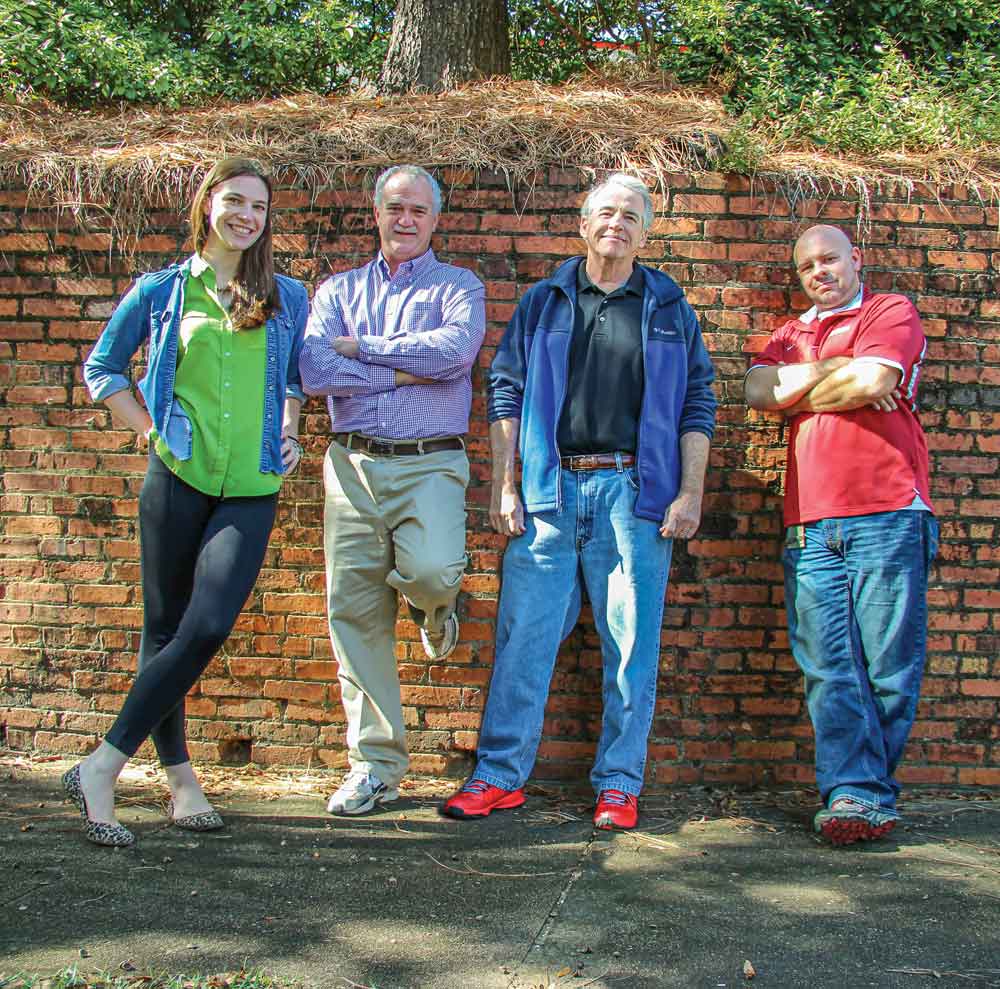
From Left: Jessica Johnson, Managing Editor; Dan Shell, Senior Editor; Rich Donnell, Editor-in-Chief; David Abbott, Senior Associate Editor
Want more content?
Wood Bioenergy is published and delivered 6 times per year tosubscribers worldwide. Readership includes corporate executives, mill ownership, mill management, logging contractors and equity venture interests. Wood Bioenergy is FREE to qualified readers.
Latest News
FS, Endowment Announce Forestry Analytics for Carbon Tracking Platform
The U.S. Forest Service and U.S. Endowment for Forestry and Communities have announced the Beta launch of the Forestry Analytics for Carbon Tracking (FACT) platform, a science-based platform that addresses the growing challenge and need…
U.S. Endowment Awards $500,000 To CTrees, Spatial Informatics Group
The U.S. Endowment for Forestry and Communities (the Endowment) has awarded $500,000 to CTrees and Spatial Informatics Group (SIG) through its Technology Solutions to Improve Forest Health and Forest Management initiative. CTrees will receive $300,000…
Pellet Mill Plants Systems – ASSET SALE
SPONSORED CONTENT PROVIDED BY SOLUTIONS 4 MANUFACTURING Two Complete Pellet Mill Plants For Sale – Rated at 62 MTPD and 120 MTPD – Both are idle- Operating on wood but can process biomass with proper…
U.S. Endowment Awards $5.5 Million To Accelerate Wood Fiber Markets
The U.S. Endowment for Forestry and Communities has announced five awards totaling $5.5 million through its Accelerating Wood Fiber Markets initiative. The five-year effort will help connect underutilized wood fiber with new buyers and support…
CM Biomass Becomes Northflare Energy
Following several years of significant development, independent wood pellet trader CM Biomass is changing its name to Northflare Energy and introducing a new visual identity. The change reflects a stronger organization, consolidated ownership, and ambitious…
Cal Fire Awards $10M For Forest, Biomass Projects
The California Department of Forestry and Fire Protection (Cal Fire) awarded $10 million in grant funding to 17 projects aimed at strengthening the state’s forest-sector workforce, reducing wildfire risk, restoring forests and increasing the beneficial…
Subscribe to Our Newsletter
Wood Bioenergy News Online hits the inboxes of subscribers in the wood-to-energy sectors.
Subscribe/Renew
Wood Bioenergy is published and delivered worldwide 6 times per year. Free to qualified readers in the U.S. Subscribers outside the U.S. are asked to pay a small fee.
Advertise
Complete the online form so we can direct you to the appropriate Sales Representative.