
ALC Leader Provides Big Picture Of Loggers
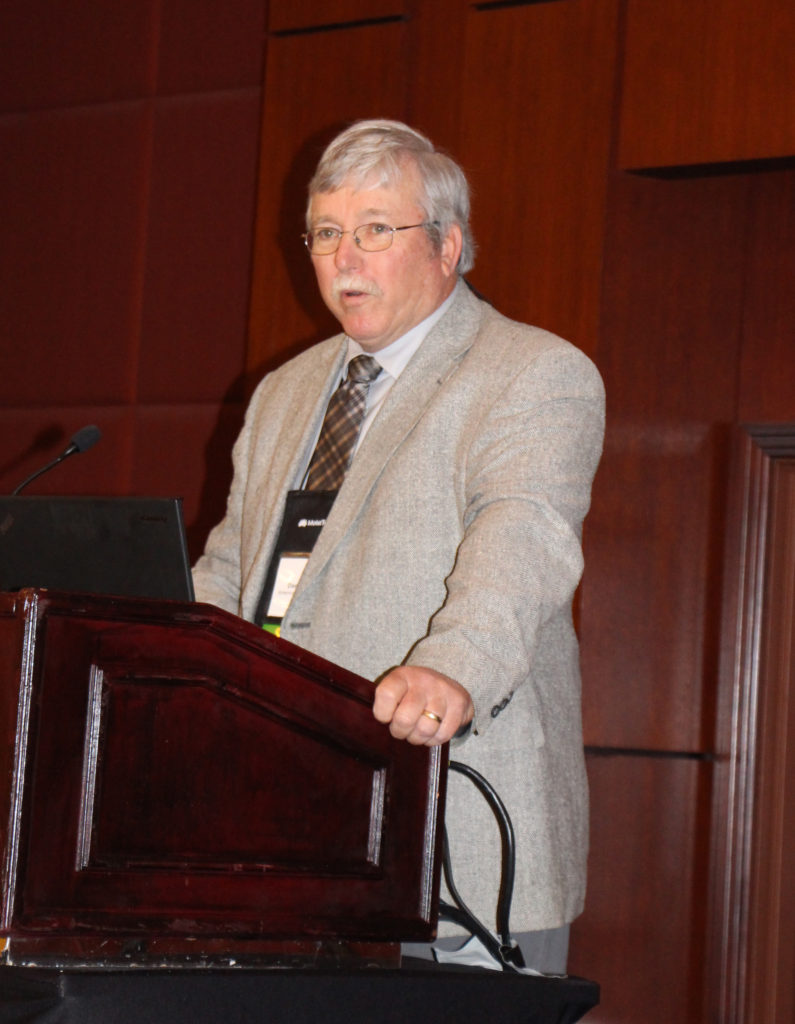 Danny Dructor, executive vice president of the American Loggers Council, spoke on the Health of the Logging Ranks and Staying Ahead of Environmental Encroachment at the Wood Bioenergy Conference & Expo. Dructor said ALC and its members appreciate the promotion of wood for bioenergy, whether in the form of a pellet, biochar, cogeneration or biofuels, because it provides new markets to participate in.
Environmentally, he said most loggers just keep doing what they have been doing for most of their careers, practicing sustainable harvesting practices that includes caring for the land, the flora and fauna on the landscape, and taking pride in their professionalism and ability to overcome change.
He noted that environmentalists have taken well intentioned laws such as the National Environmental Policy Act, the Endangered Species Act and the Clean Water Act and have abused them in liberal courtrooms and negotiated settlements with federal agencies as a means to paralyze the industry, especially on federal lands.
“We have also seen attempts to stymie operations of private lands through a host of misinformation meant to stop the wood energy markets from developing,” Dructor said.
Dructor reported on the results of the ALC 2019 Logger Survey, which received 580 responses nationwide. He said (pre COVID-19) nearly 35% of the loggers indicated they were financially worse off than they were a year ago and 16% were better off. A whopping 97% said it is virtually impossible to replace or add new hires to their operations, and 73% said the wages and benefits were not sufficient to attract the right kind of workers to the industry.
Loggers ranked finding quality drivers, trucking rates and insurance costs as the three most important impacts in being able to move wood from the landing to the mill. Insurance, equipment costs, trucking and labor ranked one through four on the list of increased operational costs.
With a choice of seven items, another question asked loggers to rank to what extent landowners or mills (or the clients they work for) valued those seven items: Low logging costs scored highest, followed by consistent production, high production, safety, environmental quality, professionalism and certification.
RELATED ARTICLES:
Loggers Gain Relief Funding From Feds
Europe’s Largest Pellet Producer Comes To Atlanta
Latest news
Wood Bioenergy Conference Featured 28 Speakers
Twenty-eight speakers, 46 equipment exhibitor companies, and three university exhibitors participated in the sixth Wood Bioenergy Conference & Expo held…
MoistTech Has This Moisture Thing Figured Out
MoistTech Corp. is a leading global manufacturer of moisture measurement sensors and equipment, first established in 2003 by Director John Fordham…
Pinnacle CEO Rob McCurdy Is Retiring
Pinnacle Renewable Energy announced that Rob McCurdy has notified the company’s Board of Directors of his intention to retire as Chief Executive Officer in May…
Find Us On Social
Subscribe to Our Newsletter
Wood Bioenergy News Online hits the inboxes of subscribers in the wood-to-energy sectors.
Subscribe/Renew
Wood Bioenergy is published and delivered worldwide 6 times per year. Free to qualified readers in the U.S. Subscribers outside the U.S. are asked to pay a small fee.
Advertise
Complete the online form so we can direct you to the appropriate Sales Representative.