

Inside this issue
FROM THE EDITORS
A “waste Problem” That Is A Gold Mine
IN THE NEWS
- Does Forest Service Letter Have Teeth?
- FS Moves Forward With Recovery
- Louisiana House Advances Pro-Pellet Legislation
- RFS Biomass Law Fails In U.S. House
- Synthec Fuels Plans $1.5B SAF Facility
Carbon Footprint Reduction: SDI's Anthracite Alternative
COLUMBUS, Miss.—Starting up in 2025, the SDI Biocarbon Solutions plant in northeast Mississippi is on the true cutting edge of new technology and carbon footprint reduction by replacing anthracite coal with sustainable biocarbon in the steelmaking process at Steel Dynamics’ (SDI) steel mill just west of Columbus.
Wood Bioenergy Conference 2026
ATLANTA, Ga.—he message out of the ninth Wood Bioenergy Conference & Expo was that an industry that was once dominated by the discussion of industrial wood pellets has transformed into something larger, with opportunities bursting at the seams, if only the industry can see them through.
Find Us On Social
From the Editors
A “Waste Problem” That Is A Gold Mine
For the last several years, much of the forest products industry has sounded like a country song played on repeat: Mills closing, chip markets disappearing, logging crews parking equipment, rural economies getting hammered.
And to be fair, the numbers are ugly.
Since 2022, 11 pulp mills—mostly in the U.S. South—have closed. Millions of tons of fiber demand vanished. Landowners watched pulpwood prices sag while economists produced increasingly depressing PowerPoints.
But if the recent Wood Bioenergy Conference & Expo in Atlanta proved anything, it’s that the industry may finally be getting tired of attending its own funeral.
The unspoken theme of the conference was simple— if life gives you lemons, stop holding a symposium about citrus oversupply and make some dang lemonade already. All that “excess” everyone keeps whining about? Turns out it might actually be valuable. Imagine that, haven’t the likes of Drax, Highland, Graanul and Enviva been saying that for years now?
Speaker after speaker laid out a future where forest residuals aren’t treated like an inconvenient pile of leftovers nobody wants, but as feedstock for energy, fuels, carbon products, biomaterials, and emerging markets that are suddenly attracting real money and real attention.
AFRY Management Consulting’s Vincent Leon estimated higher-value uses for forest residues in the South could unlock $20 billion to $25 billion annually in incremental value. Not from discovering some magical new resource. From utilizing the one already sitting in slash piles, chip bins, and woodyards across the region.
But the conference made one thing abundantly clear: The next generation of forest products markets won’t look like the last one. Data centers alone could become a massive opportunity. Georgia Forestry Commission’s Dru Preston pointed out that a single hyperscale data center needing 1.2 gigawatts of electricity could theoretically support 12 biomass power plants consuming 1.2 million tons of wood chips annually. Twelve plants.
That’s not just a win for biomass developers. That’s a win for logging contractors, trucking companies, landowners, building products mills, and every rural diner where foresters drink bad coffee at 5 a.m.
The fiber demand projections tied to sustainable aviation fuel are enormous—large enough that forestry could become a central player in decarbonization efforts.
The irony in all this is almost painful.
For decades, the forest products industry perfected the art of using every part of the tree. Lumber, chips, bark, sawdust, pellets, nothing is wasted. Then suddenly the industry hit a rough patch and started acting like residual fiber was yesterday’s garbage instead of tomorrow’s opportunity.
Thankfully, some companies never got the memo.
Take biochar for example: A few years ago, many operations viewed carbon-rich residuals as disposal headaches. Now companies like Freres Engineered Wood and Steel Dynamics are turning them into soil amendments, filtration products, concrete and steel additives, and carbon credit revenue streams.
In other words, they figured out that paying landfill tipping fees is less fun than making money.
What’s becoming increasingly obvious is that forestry’s future won’t be built solely on traditional products anymore. Lumber and panels will always matter, but the next era of the industry is going to involve carbon markets, renewable fuels, grid reliability, bio-based chemicals, and replacing fossil- intensive materials with wood-derived alternatives.
And frankly, the industry doesn’t have much choice.
The old pulp market cavalry isn’t riding over the hill anytime soon. Waiting around for 1998 to come back is not a business strategy. The companies and regions that survive will be the ones that aggressively pursue new uses for fiber instead of nostalgically staring at shuttered paper mills like abandoned Blockbuster stores.
The encouraging part is that the tone in Atlanta felt different. Because if the wood bioenergy sector can finally be considered a critical piece of America’s energy and manufacturing future, it may discover something surprising…The lemons were the opportunity all along.
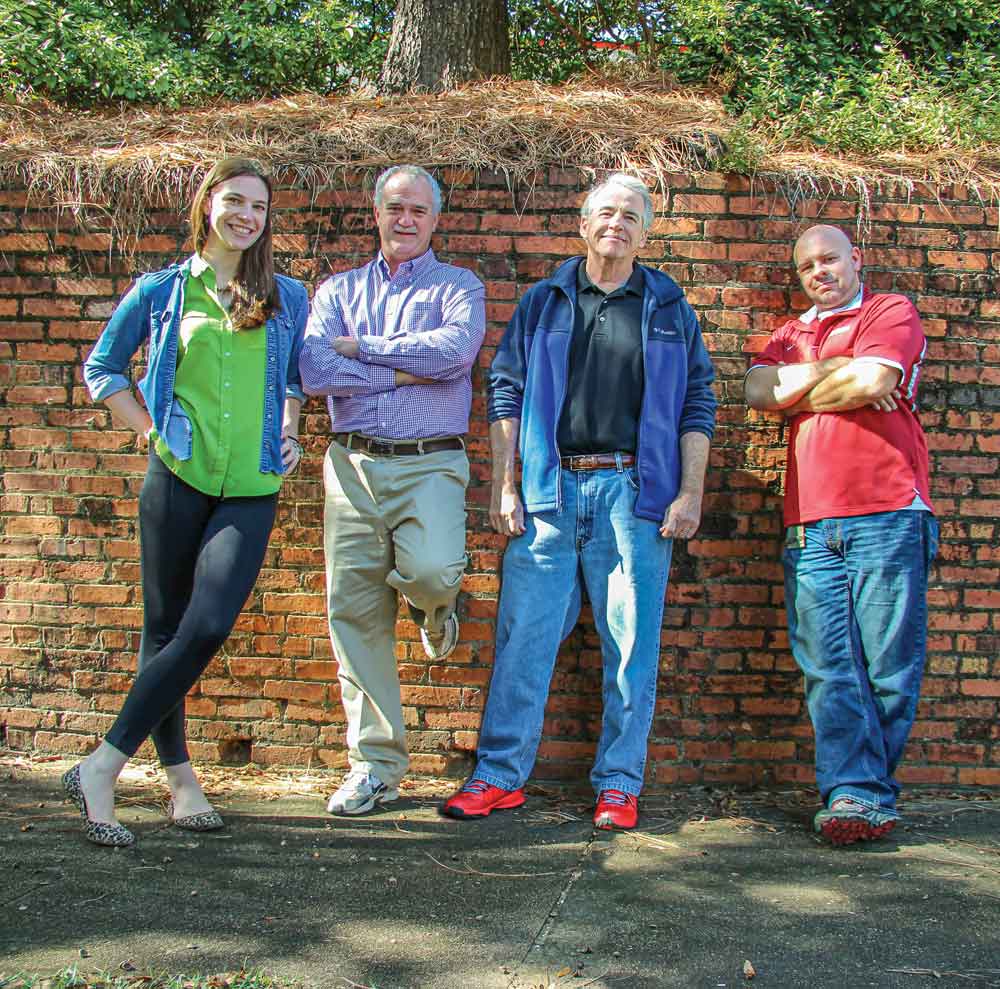
From Left: Jessica Johnson, Managing Editor; Dan Shell, Senior Editor; Rich Donnell, Editor-in-Chief; David Abbott, Senior Associate Editor
Want more content?
Wood Bioenergy is published and delivered 6 times per year tosubscribers worldwide. Readership includes corporate executives, mill ownership, mill management, logging contractors and equity venture interests. Wood Bioenergy is FREE to qualified readers.
Latest News
U.S. Endowment Awards $500,000 To CTrees, Spatial Informatics Group
The U.S. Endowment for Forestry and Communities (the Endowment) has awarded $500,000 to CTrees and Spatial Informatics Group (SIG) through its Technology Solutions to Improve Forest Health and Forest Management initiative. CTrees will receive $300,000…
Pellet Mill Plants Systems – ASSET SALE
SPONSORED CONTENT PROVIDED BY SOLUTIONS 4 MANUFACTURING Two Complete Pellet Mill Plants For Sale – Rated at 62 MTPD and 120 MTPD – Both are idle- Operating on wood but can process biomass with proper…
U.S. Endowment Awards $5.5 Million To Accelerate Wood Fiber Markets
The U.S. Endowment for Forestry and Communities has announced five awards totaling $5.5 million through its Accelerating Wood Fiber Markets initiative. The five-year effort will help connect underutilized wood fiber with new buyers and support…
CM Biomass Becomes Northflare Energy
Following several years of significant development, independent wood pellet trader CM Biomass is changing its name to Northflare Energy and introducing a new visual identity. The change reflects a stronger organization, consolidated ownership, and ambitious…
Cal Fire Awards $10M For Forest, Biomass Projects
The California Department of Forestry and Fire Protection (Cal Fire) awarded $10 million in grant funding to 17 projects aimed at strengthening the state’s forest-sector workforce, reducing wildfire risk, restoring forests and increasing the beneficial…
Beaver Lake Biofuels Project Bites The Dust In Louisiana
SunGas Renewables Inc. announced it will cease further development of the Beaver Lake Biofuels project, a proposed wood fiber-to-low carbon methanol facility in central Louisiana near Alexandria. Beaver Lake planned to integrate three SunGas S1000…
Subscribe to Our Newsletter
Wood Bioenergy News Online hits the inboxes of subscribers in the wood-to-energy sectors.
Subscribe/Renew
Wood Bioenergy is published and delivered worldwide 6 times per year. Free to qualified readers in the U.S. Subscribers outside the U.S. are asked to pay a small fee.
Advertise
Complete the online form so we can direct you to the appropriate Sales Representative.