
Forest Service Backs Out Of Awarding Phase 2 Arizona Forests Restoration Contract; Uncertainties Persist For Novo Power
Anxious bidders for the Phase 2 contract that’s part of the federal 4 Forests Restoration Initiative (4FRI) seeking to treat and improve forest health conditions on more than 2.5 million acres across four Arizona national forests were told to wait a while longer after U.S. Forest Service (FS) officials abruptly cancelled the Phase 2 Request for Proposal (RFP) process in mid-September, just when it appeared that the winning bids were about to be awarded. The FS cited “performance risk” concerns over the proposed 20-year life of the Phase 2 stewardship contract that covers more than 500,000 acres and would include processing and moving mountains of biomass in addition to logs.
A FS release concerning the cancellation says, “It is in the best interest of the Government to thoroughly re-assess the requirement so that any new solicitation issued would better address all risks to offerors and the Government, including financial and investment risks.”
Two companies were apparently the primary bidders—one proposing to build a sawmill and the other proposing to build an OSB plant. Novo Power, a Snowflake, Ariz.-based biomass power facility and company, participated in both of those bids to take the biomass resulting from the two mills.
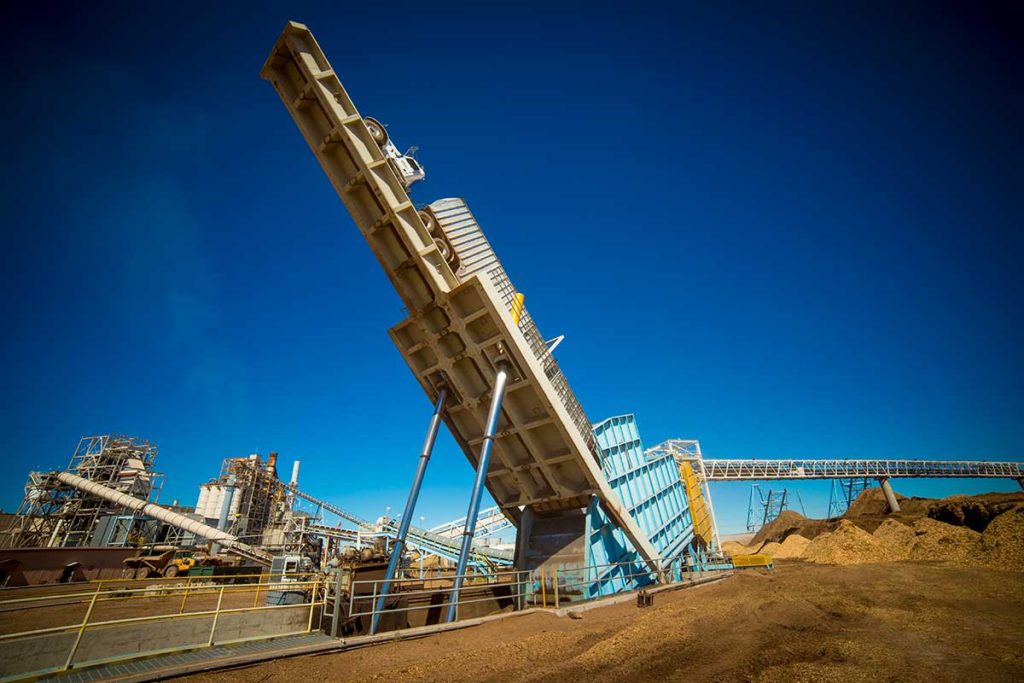
“I was stunned by the cancellation,” comments Novo Power President Brad Worsley. “I knew that there was always a possibility of cancellation but the stated reasons for cancellation were true a year ago; the USFS should have cancelled then if the gap could not be bridged.”
Worsley pointed to the agency’s growing concerns over the financial ramifications for the government and the project bidders if the promised acreage for treatment ran into issues or even if the reduced acreage was sufficient.
Novo Power has less than two years remaining on its current PPAs. “At this point we need resolution on our PPAs so that we can move forward, invest and maintain the critical employee base that we have today,” Worsley says. “We will support whatever comes in the future but our future needs certainty now.”
For Novo Power the Phase 2 RFP represented a stranglehold on collaboration. “Meetings between state and federal agencies, industry and NGOs became nearly impossible without undermining the integrity of the RFP and so many of the collaborative efforts died on the vine,” Worsley says. “It has also been a reminder of the disrespect shown to current industry. We all want a new shiny industry member but we put at risk the current industry, and in the end we are still the ones here and doing the work at the end of this very painful RFP process.”
Novo Power has been involved in utilizing material produced in ongoing forest health operations in the White Mountains area, but its 24 MW facility can only take so much.
The agency says a reassessment could address economics; acreage and volume of material to be offered; biomass treatment requirements; and road maintenance requirements.
Arizona Gov. Doug Ducey and other elected officials slammed the decision, citing the federal government’s inability to step up to address wildfire risks and protect Arizona communities.
The Phase 2 setback continues a tough run for the 4FRI effort: Phase 1, initially awarded in 2012 then transferred in 2013 to its current owner NewLife Forest Restoration, and including 300,000 acres over 10 years, has been hampered due to lack of logging and conversion capacity and is just now appearing to turn the corner on infrastructure needs while the number of acres actually treated remain well below initial projections.
NewLife, which plans to build a sawmill at Bellemonte, Ariz., was apparently one of the major bidders for the Phase 2 contract.
John Godfrey, owner of Godfrey Forest Products, was also a bidder and proposed to build an OSB plant in Winslow. He says the announcement came as a surprise, but he remains confident any issues will be resolved.
The FS is committed to forest restoration, Godfrey believes. “They’re also under tremendous pressure. They’ll come forward with a new mechanization or proposal. It can’t be that nothing happens.”
Funding for forest health and forest fire prevention programs and contracts is included the Biden administration $1 trillion infrastructure that has passed the U.S. Senate and is before the House of Representatives, and most likely some of that funding would be directed toward the national forests in Arizona.
RELATED ARTICLES:
Latest news
Enviva Pellet Plant Receives Thumbs Up
Enviva Pellet Plant Receives Thumbs UpEnviva, the world’s largest producer of wood pellets, reports that the Alabama Dept. of Environmental Management (ADEM) approved a permit allowing Enviva to construct a wood pellet facility in Sumter County. This permit paves the...
Pinnacle, Westervelt, Two Rivers Come Together
Pinnacle, Westervelt, Two Rivers Come TogetherPinnacle Renewable Energy plans to build an industrial wood pellet production facility in the Southeast U.S. at Demopolis, Ala., in close proximity to its Aliceville, Ala. facility. The new mill will be located adjacent an...
Post-Michael Salvage Winds Down
Post-Michael Salvage Winds DownEstimates of successful wood salvage on timberland damaged by Hurricane Michael along the Florida Panhandle and southwest Georgia range from 10-16%, according to some authorities. Making landfall on October 10, 2018 near Mexico Beach in...
OSHA Increases Inspections, Safety Training Sessions
OSHA Increases Inspections, Safety Training Sessions in 2019The U.S. Department of Labor’s Occupational Safety and Health Administration’s (OSHA) fiscal year 2019 final statistics show a significant increase in the number of inspections and a record amount of...
Scientists Nationwide Endorse Wood Energy
Scientists Nationwide Endorse Wood EnergyThe US Industrial Pellet Assn. (USIPA) has endorsed a recent letter signed by more than 100 scientists from more than 50 colleges and universities citing the benefits of wood energy. The letter, published by the National Assn....
Find Us On Social
Subscribe to Our Newsletter
Wood Bioenergy News Online hits the inboxes of subscribers in the wood-to-energy sectors.
Subscribe/Renew
Wood Bioenergy is published and delivered worldwide 6 times per year. Free to qualified readers in the U.S. Subscribers outside the U.S. are asked to pay a small fee.
Advertise
Complete the online form so we can direct you to the appropriate Sales Representative.